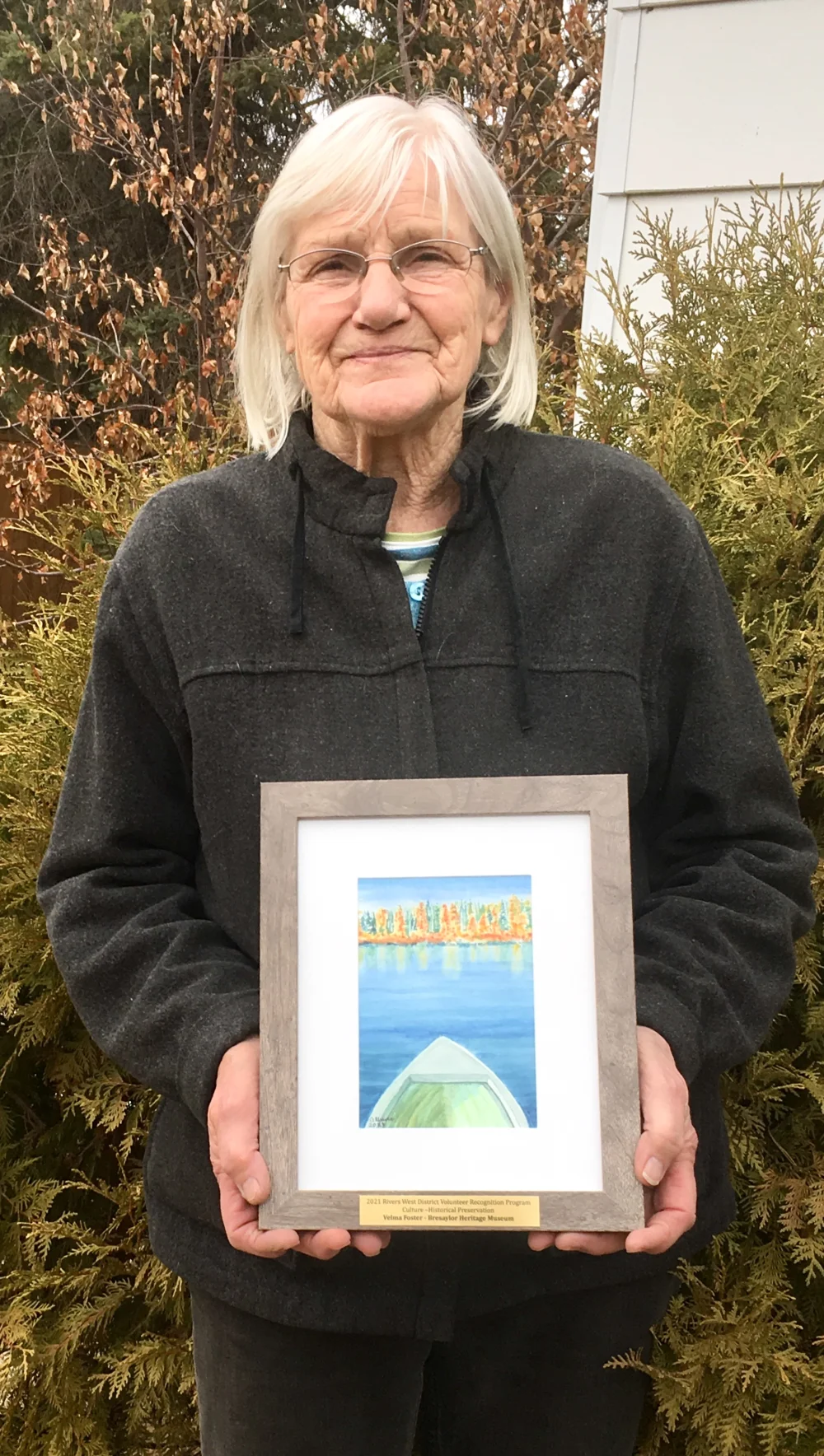
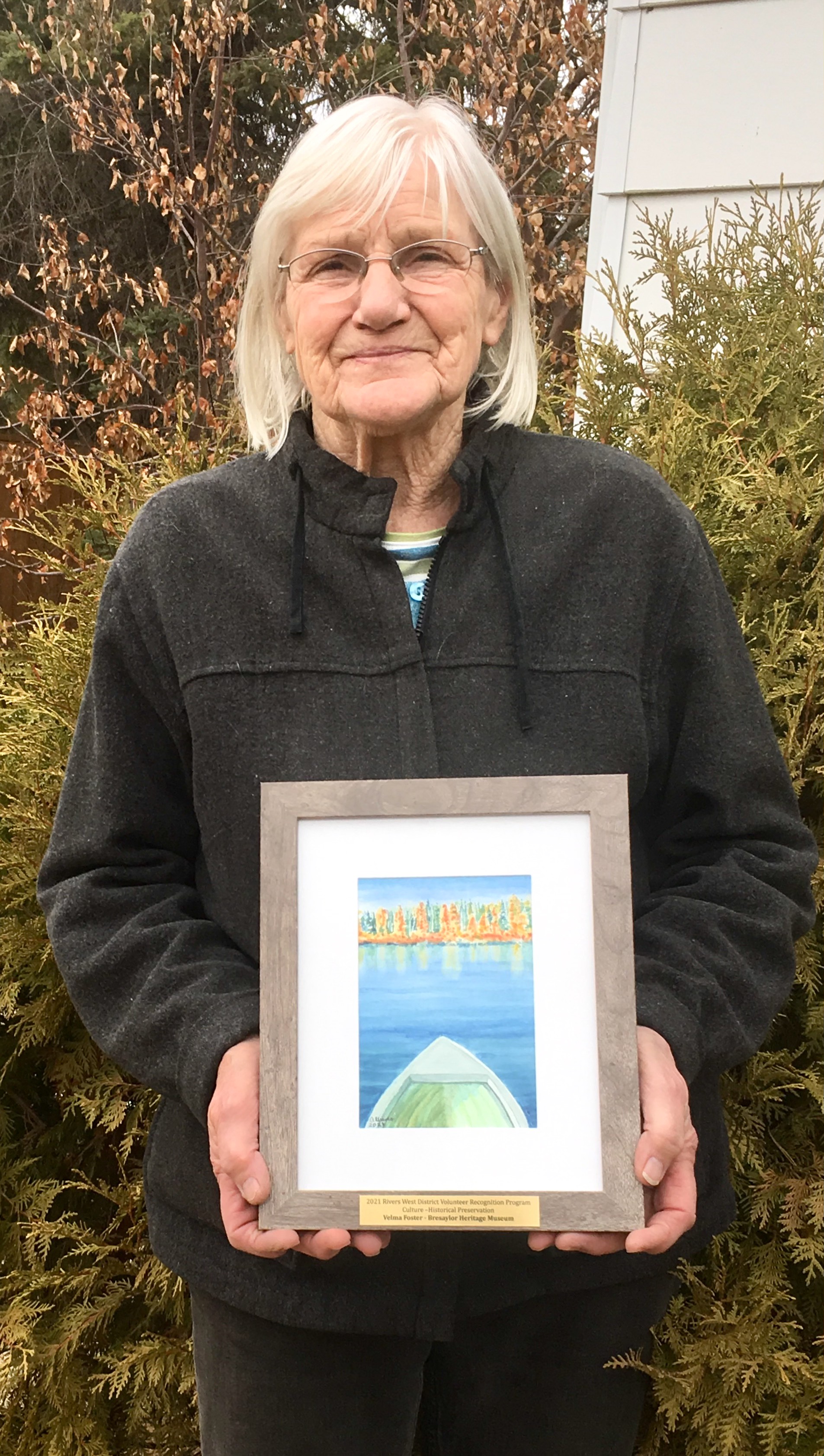
Velma Foster will stand as a remarkable figure in Canadian art and Saskatchewan Culture- an artist, educator, printmaker, and community anchor whose influence has spanned more than half a century. Her life’s work has enriched both the visual landscape of Canada and the lives of many who have been touched by her creativity and dedication.
Born in 1938 in Maidstone, Saskatchewan, Velma’s journey in the visual arts took root in the Canadian Prairies. She pursued formal training at the Alberta College of Art in Calgary from 1957-1962, studying under significant artists such as Illingworth Kerr, Ron Spickett, Stan Perrott, and Ken Sturdy.
Her continuing education included participation in influential institutions and workshops - most notably the Emma Lake Summer School in 1966 with Harold Cohen, and etching classes at New York’s Pratt Institute in 1969-70. These opportunities helped her deepen her technical skills and her approach to image, medium and abstraction.
Velma’s work was characterized by breadth of medium and exploratory vision:
Printmaking was central to her practice. While in Alberta, she developed strong skill in printmaking through experimentation and formal workshops.
She also working in acrylic, oil, pen and ink, watercolour, and photography - Velma was a versatile artist comfortable in both line and colour, abstraction and representation. Her printmaking especially has embraced geometry, abstraction, vivid colour and optical effects. Velma, together with contemporaries such as Katie Ohe and Harry Kiyooka, was part of a a movement in the 1960s in Calgary that brought bold geometric abstract prints to the local art scene- what one curator called “cutting-edge” work.
Velma was quoted saying she alternates between “working from the medium” ( letting technical exploration evoke imagery) and working “from the image in the mind”, solving technical problems to get to a pre-imagined outcome.
Velma’s impact extends beyond her own canvas and prints. She has been a teacher, mentor, designer, organizer, administrator and curator:
She taught in Calgary, first at the Calgary Allied Arts Centre, then at the Alberta College of Art.
Early in her career she designed and silkscreened posters for the Allied Arts Centre, contributing not only her fine art but also arts-communication and public visibility.
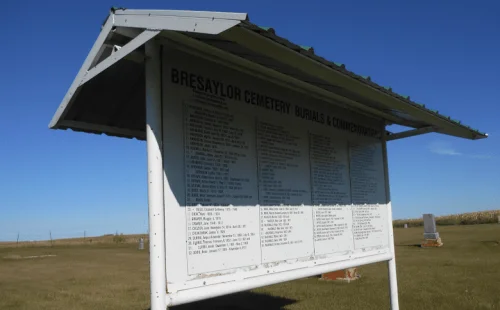
Velma’s community roots were strong. After returning to Saskatchewan in 1977, she restored St. Anne’s Church in Bresaylor and made it her home and studio. It took a tornado to move her out of her beloved church and wished it could be restored. The Bresaylor Board was made aware of her desire to have it preserved as long as possible.
Velma founded the Bresaylor Heritage Museum Association in 1984 and acted as curator and administrator of the museum. But we can’t forget she also acted as groundskeeper, tour guide, book keeper etc. She would do all of this work for the historic site primarily as a volunteer, with commissions from her artistic talents providing her income. Her role in preserving local heritage, through both art and museum work, underscores her deep commitment to place and memory.
Velma had exhibits widely across Canada from the early 1970s.
Her work as appeared in several public and institutional collections: the Canadian Council of Art Bank in Ottawa, Glenbow Museum in Calgary, the Edmonton Art Gallery, The Alberta Art Foundation, the University of Calgary among others.
A recent show in 2023 reunited Velma with fellow artist Katie Ohe, recalling their early abstract printmaking work in Calgary. The show not only explored their art, but also their enduring friendship.
Some of Velma’s limited edition prints - lithographs and silkscreens capturing Saskatchewan subjects- are currently still sought after in auctions and for local heritage museums.
Velma graciously gifted the remainder of her print collection to the Bresaylor Heritage Museum who will be creating a gallery in her honour, featuring the prints of the Bresaylor area historical buildings that will continue to tell the stories of not only Bresaylor but of Velma herself.
At a time when printmaking facilities and support in Calgary were limited, she and her peers pushed the boundaries, introducing visual languages of geometry, optical effects, and bold colour that were unusual locally.
Her move back to Saskatchewan and the restoration of her home/studio, her work founding and curating a heritage museum, and her subjects often rooted in local architectures or schools show a strong sense of place. She wasn’t just documenting, she was preserving, interpreting and keeping alive memory and identity. An identity that included indigenous history of the Metis who settled Bresaylor in 1882.
Whether through formal teaching, poster design, or her museum work, Velma opened windows for others - Students, local community, heritage institutions in which she speer headed the Alex Lennie House at Bresaylor in getting Municipal Heritage designation. She engaged with visual art, technology of printmaking and cultural memory.
Velma’s career spans many decades, yet she remained open to exploring new techniques, revisiting early works, and seeing them in new contexts ( as in the Calgary reunion show). Her reflection in interviews conveyed joy, curiosity, and gratitude. Not long before Velma moved into town, I had the pleasure of speaking with her. Her latest intrigue was indigenous spiritual beliefs and teaching. Like myself, she found a real connection to the simplicity of connecting with the ground beneath our feet and the simplicity in the circle teachings. It did not go unnoticed how Velma emulated so much of these valued teachings, but her immense modesty would never allow her to accept praise or even thanks without squirming with discomfort at any spotlight being thrown in her direction.
Velma Foster has shown us what it means to be a true artist and pillar in the community in the broadest sense - not only as someone who painted or printed, but one who taught, preserved, built institutions, cared for landscape and community and allowed both experiment and memory to guide her work.
Saskatchewan schools, her experiments with form and medium, her decades as a teacher and builder of heritage tell a story of art that is rooted, generous, and enduring. As long as her work hangs in galleries, homes, museums, or her legacy museum that is Bresaylor, her vision will continue to inspire: for beauty in geometry and colour, for the stories embedded in place, and for the belief that art and historical preservation is a life-long conversation between medium, image and community.
Velma’s life in art and historical preservation reminds us that creativity is not simply about what is made - but how deeply one connects to where one comes from , and how generously one shares that connection.
Velma shared generously with all of us and we hope we can all continue to carry on her legacy of self-lessness in community.
We love you Velma and you will be deeply missed.